 17/08/2026
The New Era of Retail Support
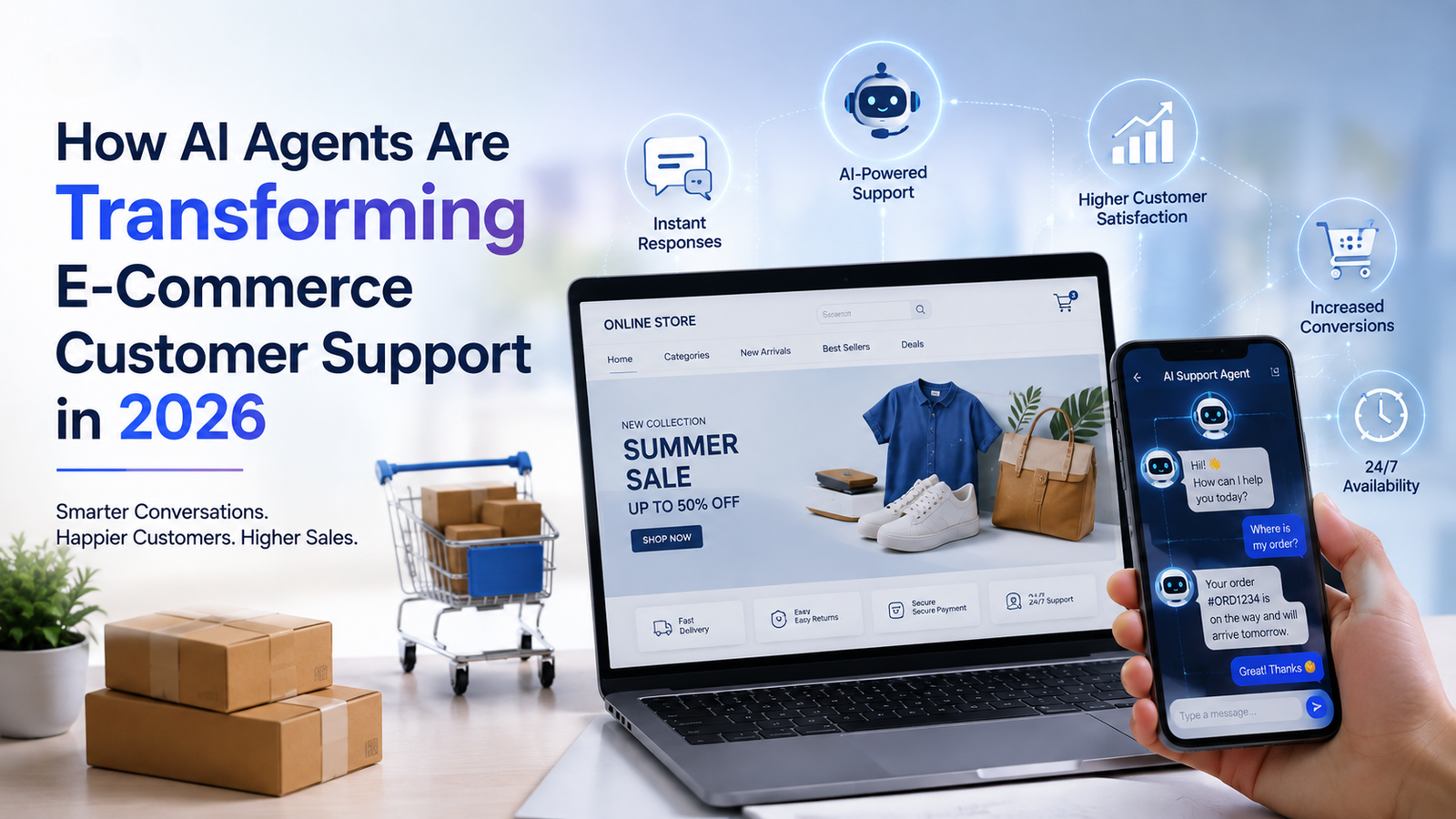
The e-commerce landscape is more competitive than ever. Consumers expect instant responses, personalized recommendations, and seamless issue resolution at any time of the day. Traditional customer support teams, constrained by working hours and human limitations, struggle to keep up with these 24/7 demands.
Enter AI Agents. In 2026, intelligent automated assistants are no longer just basic chatbots that give generic answers. They are sophisticated AI systems capable of understanding context, handling complex queries, processing returns, and acting as virtual personal shoppers.
Businesses adopting AI support are experiencing higher customer retention, reduced operational costs, and an exponential increase in sales conversions through smart recommendations.
 by Skylink Infosolutions™
Key Transformations Driven by AI Agents
🕒 24/7 Availability
AI agents never sleep. They provide instant support to customers across different time zones, ensuring no query goes unanswered.
🎯 Hyper-Personalization
By analyzing browsing history and past purchases, AI agents recommend products tailored exactly to the customer's taste.
🔄 Automated Returns & Refunds
AI seamlessly processes RMA requests, tracks packages, and issues refunds without human intervention.
How AI Agents Handle Customer Journeys
🤖 Step 1: Intent Recognition
The AI system immediately analyzes the customer's message to understand their intent—whether they are asking for a refund, tracking an order, or looking for product advice.
🧠 Step 2: Contextual Analysis
The AI connects to the CRM and order database to fetch the customer's purchase history, shipping status, and loyalty tier in milliseconds.
⚡ Step 3: Automated Action
The AI executes the necessary workflow, such as generating a return label, upgrading shipping, or providing a personalized discount code, without human approval.
📈 Step 4: Escalation to Humans (If Needed)
If the query is highly complex or emotionally sensitive, the AI seamlessly transfers the full chat history to a human agent.
Before vs After AI Integration
| Traditional E-Commerce Support | AI-Powered Support |
|---|---|
| Response time: Hours or days | Response time: Milliseconds |
| Support limited to business hours | 24/7/365 uninterrupted support |
| High operational costs for large teams | Scalable at a fraction of the cost |
| Generic "one-size-fits-all" replies | Highly personalized, context-aware interactions |
| Manual order tracking and refunds | Instant automated workflows |
Departments Benefiting from E-Commerce AI
💼 Sales & Marketing
AI agents proactively upsell and cross-sell products, increasing Average Order Value (AOV).
📊 Logistics & Fulfillment
AI instantly handles "Where is my order?" (WISMO) tickets by directly querying warehouse APIs.
📞 Customer Service
Human agents are freed from repetitive queries and can focus on high-value, complex customer relationship management.
📂 Inventory Management
AI alerts customers about back-in-stock items and dynamically hides out-of-stock products during chat recommendations.
Challenges of AI Implementation
- ⚠️Initial setup requires deep integration with existing ERP and CRM systems.
- 🔐Data privacy and security must be strictly maintained when AI handles payment info.
- 👨💼The brand voice must be carefully tuned so the AI doesn't sound overly robotic.
The Future of E-Commerce
As we move further into the digital age, businesses that fail to adopt AI-driven support will fall behind. Integrating intelligent AI agents into your e-commerce platform isn't just about saving money—it's about providing a superior customer experience that drives loyalty and revenue.
Final Thoughts
AI automation in e-commerce is no longer a futuristic concept. It is actively transforming how online retailers interact with their customers.
Organizations using intelligent automation systems are saving time, improving productivity, reducing cart abandonment, and building a highly scalable digital storefront.