 03/08/2026
Moving Beyond Traditional Data Storage
For decades, Enterprise Resource Planning (ERP) systems have been the backbone of business operations. However, traditional ERPs are largely reactive—they store data, generate static reports, and require heavy manual input. In today's fast-paced business environment, simply logging what happened yesterday isn't enough to compete tomorrow.
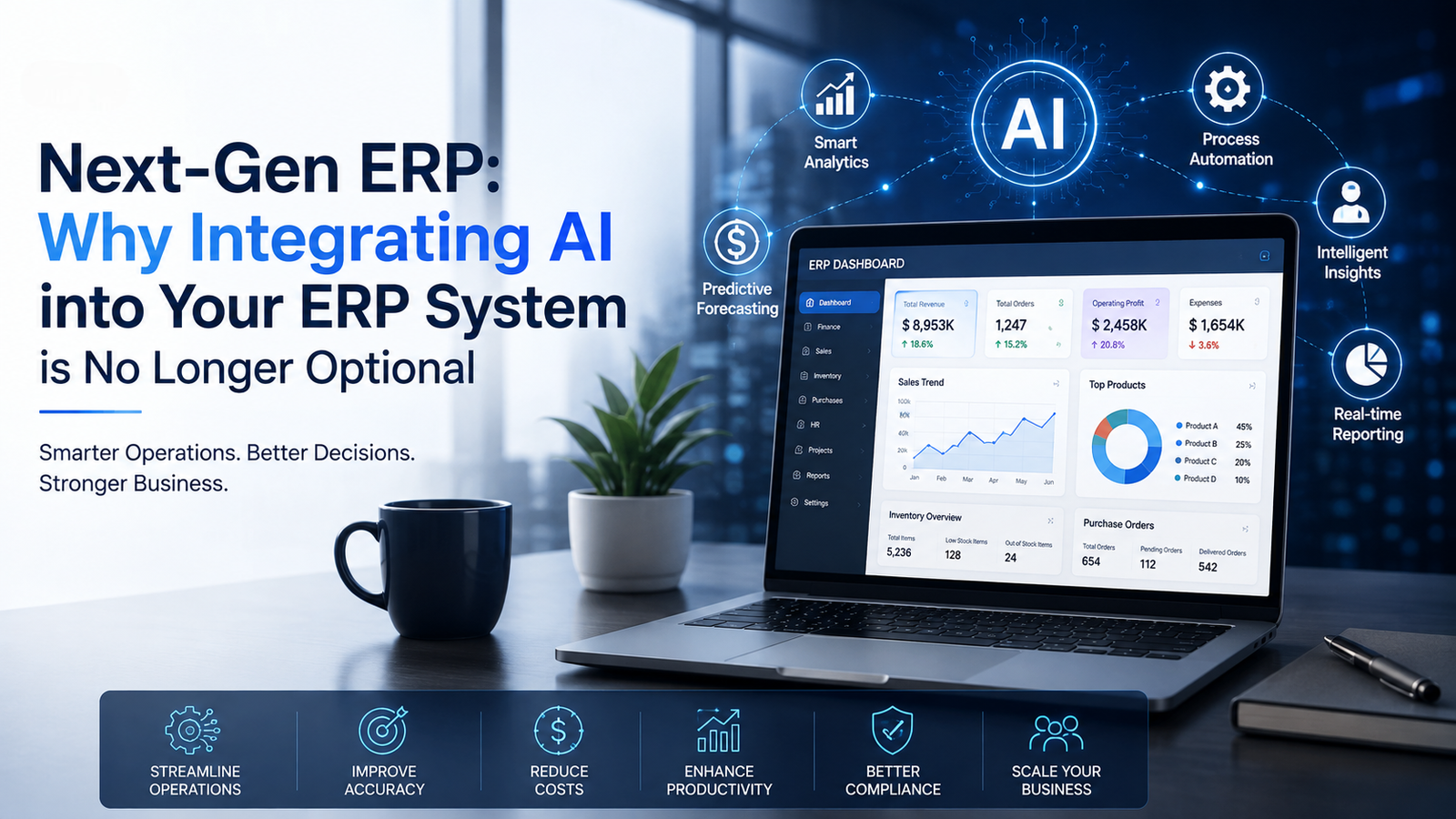
The integration of Artificial Intelligence (AI) transforms an ERP from a passive database into a proactive business partner. An AI-powered ERP doesn't just store data; it analyzes it, predicts trends, automates mundane tasks, and prescribes actionable insights to executives.
Modern enterprises leveraging AI in their ERP are seeing massive reductions in operational bottlenecks and significant improvements in cash flow forecasting and supply chain management.
 by Skylink Infosolutions™
Core Benefits of an AI-Powered ERP
📊 Predictive Analytics
AI analyzes historical data to forecast demand, identify supply chain risks, and optimize inventory levels before issues arise.
⚙️ Automated Routine Tasks
Invoice processing, data entry, and basic payroll functions are completely automated, freeing your workforce for strategic initiatives.
🛡️ Anomaly Detection
Machine learning algorithms monitor financial transactions in real-time, instantly flagging anomalies that human auditors might miss.
How AI Enhances the ERP Data Pipeline
🤖 Step 1: Automated Data Ingestion
AI uses Optical Character Recognition (OCR) and Natural Language Processing (NLP) to read invoices, emails, and contracts, automatically entering data into the ERP.
🧠 Step 2: Real-time Analysis
The system cross-references new data with historical patterns, checking for discrepancies, inventory shortages, or cash flow implications.
⚡ Step 3: Prescriptive Actions
Instead of just showing a chart, the AI suggests actions: "Reorder Product X now from Supplier Y to avoid a stockout in 14 days."
📈 Step 4: Continuous Learning
As the business makes decisions, the AI learns from the outcomes, constantly refining its future predictions and recommendations.
Traditional ERP vs AI-Integrated ERP
| Traditional ERP | AI-Integrated ERP |
|---|---|
| Reactive reporting (What happened?) | Predictive and prescriptive (What will happen and what should we do?) |
| Manual data entry required | Automated data capture via NLP and OCR |
| Static inventory thresholds | Dynamic inventory optimization based on market trends |
| Rule-based financial auditing | Machine learning-based continuous anomaly detection |
| Siloed departmental views | Holistic, interconnected insights across all departments |
Departments Transformed by AI ERPs
💼 Finance & Accounting
Automated account reconciliation, smart expense auditing, and accurate cash flow forecasting.
🚚 Supply Chain & Procurement
Predictive maintenance for machinery and dynamic routing for logistics based on real-time weather and traffic data.
👥 Human Resources
AI predicts employee turnover risks, automates candidate screening, and personalizes onboarding and training paths.
🏭 Manufacturing
Computer vision for quality control and AI-driven production scheduling to minimize downtime and waste.
Challenges to Consider
- ⚠️Garbage in, garbage out: AI requires clean, structured data to make accurate predictions.
- 🔐Upgrading legacy systems can be costly and requires significant change management.
- 👨💼Employees must be upskilled to transition from data entry roles to strategic analytical roles.
Conclusion
Upgrading to an AI-driven ERP is no longer a luxury for enterprise organizations; it is a critical necessity for survival. Businesses that leverage AI in their resource planning will enjoy lower operational costs, higher efficiency, and a significant competitive advantage in the market.
Final Thoughts
The transition from traditional ERP to AI-powered ERP represents a shift from a system of record to a system of intelligence. By partnering with experts to custom-build or upgrade your ERP, you ensure your business is ready for the digital demands of the next decade.