 11/09/2025
Cyber Security in the Modern IT Era: Protecting Data, Systems, and Business Trust
Today, almost every business depends on computers, mobile phones, the internet, and online data. Customer details, payments, emails, company documents, and daily work are all stored digitally. While this makes work faster and easier, it also creates new risks.
Cyber security is simply about keeping this digital information safe. Just like we lock our homes and offices to protect valuables, cyber security protects computers, networks, and data from hackers, fraud, and online attacks. Without proper protection, businesses can lose data, money, and customer trust within minutes.
 by Skylink Infosolutions™
Essential Cyber Security Tools & Technologies
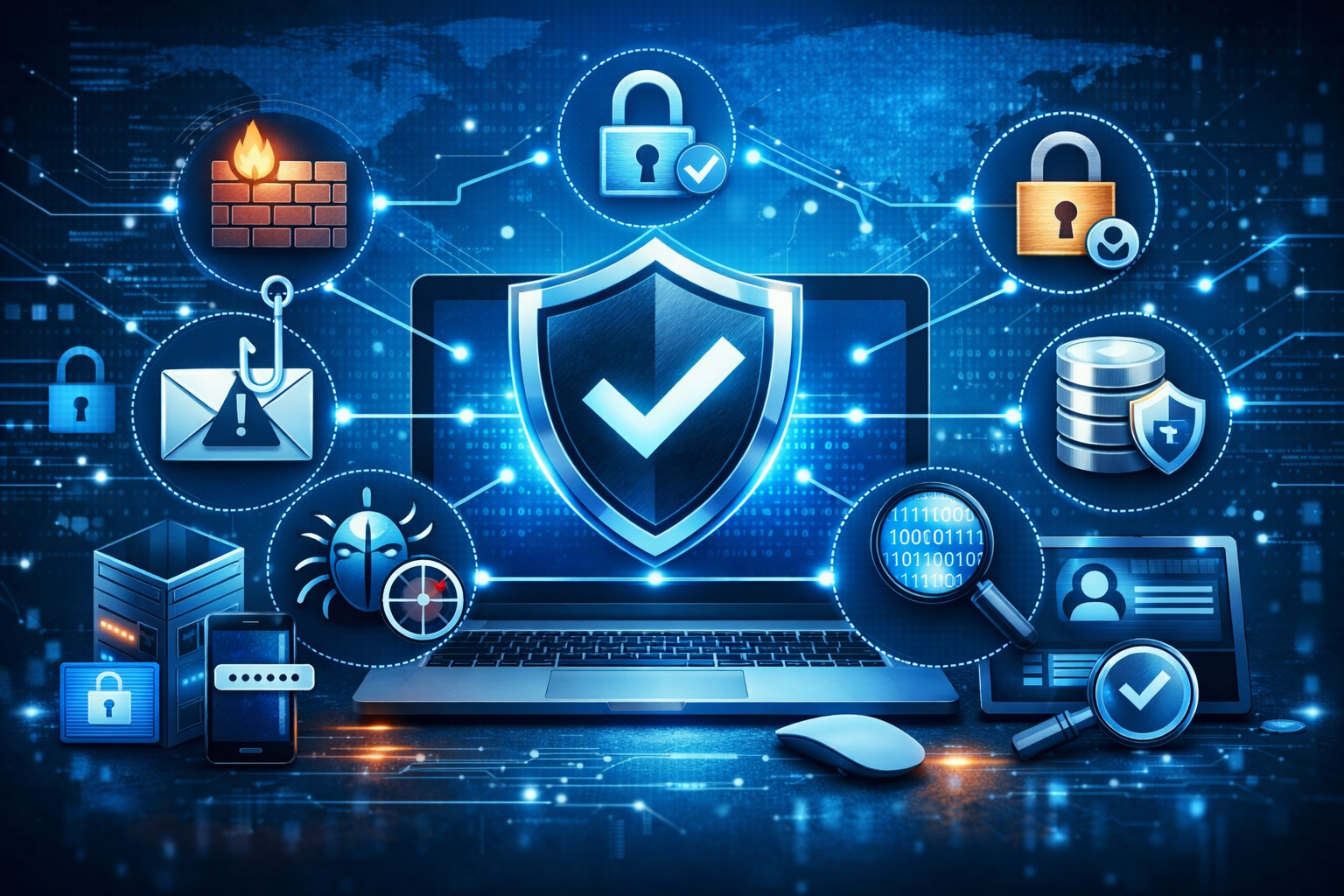
These tools work together to protect systems, data, and users from online threats.
- 🛡️ Firewalls – Block unauthorized network access.
- 🦠 Antivirus & Anti-Malware – Stop viruses and ransomware.
- 🎣 Phishing Protection – Prevents fake emails and scams.
- 🔐 Data Encryption – Keeps sensitive data unreadable.
- 👁️ Intrusion Detection (IDS) – Detects suspicious activity.
- 🔑 Multi-Factor Authentication – Secures logins with extra verification.
Cyber Security Layers: How Protection Works Together
Cyber security does not rely on a single tool or solution. Instead, it works through multiple protective layers that collectively reduce risks and strengthen overall defense.
Network Layer
Protects internal networks from unauthorized access using firewalls and traffic monitoring.
Endpoint Layer
Protects sensitive information through encryption and secure storage methods.
Application Layer
Ensures applications are protected from vulnerabilities and unauthorized usage.
Data Layer
Protects sensitive information through encryption and secure storage methods.
User Layer
Focuses on identity protection, access control, and user awareness.
Cyber Security in Action: Where Protection Matters Most
Cyber security is applied across multiple industries to protect sensitive data, ensure system availability, and maintain customer trust. Rather than focusing on specific companies, understanding industry-level use cases provides a clearer picture of its real-world impact.
| Industry | How Cyber Security Helps |
|---|---|
| Banking & Financial Services | Secures online transactions, prevents fraud, and protects customer financial data. |
| Healthcare Systems | Protects patient records, hospital networks, and connected medical devices from cyber threats. |
| E-Commerce Platforms | Prevents payment fraud and safeguards personal and customer information. |
| Corporate IT Infrastructure | Secures internal networks, emails, and cloud-based systems from unauthorized access. |
Security Is a Responsibility, Not a Feature
Cyber security is not something that can be added at the end of a system. It must be built into every digital process from the beginning. Organizations that treat security as a shared responsibility—not just an IT task—are better prepared to protect their data, users, and reputation in an ever-evolving digital world.