 13/07/2026
A Patient-First Digital Approach
The healthcare industry generates enormous amounts of patient data daily. Managing this data securely while providing personalized, timely care is a massive challenge for hospitals and clinics relying on outdated, fragmented systems.
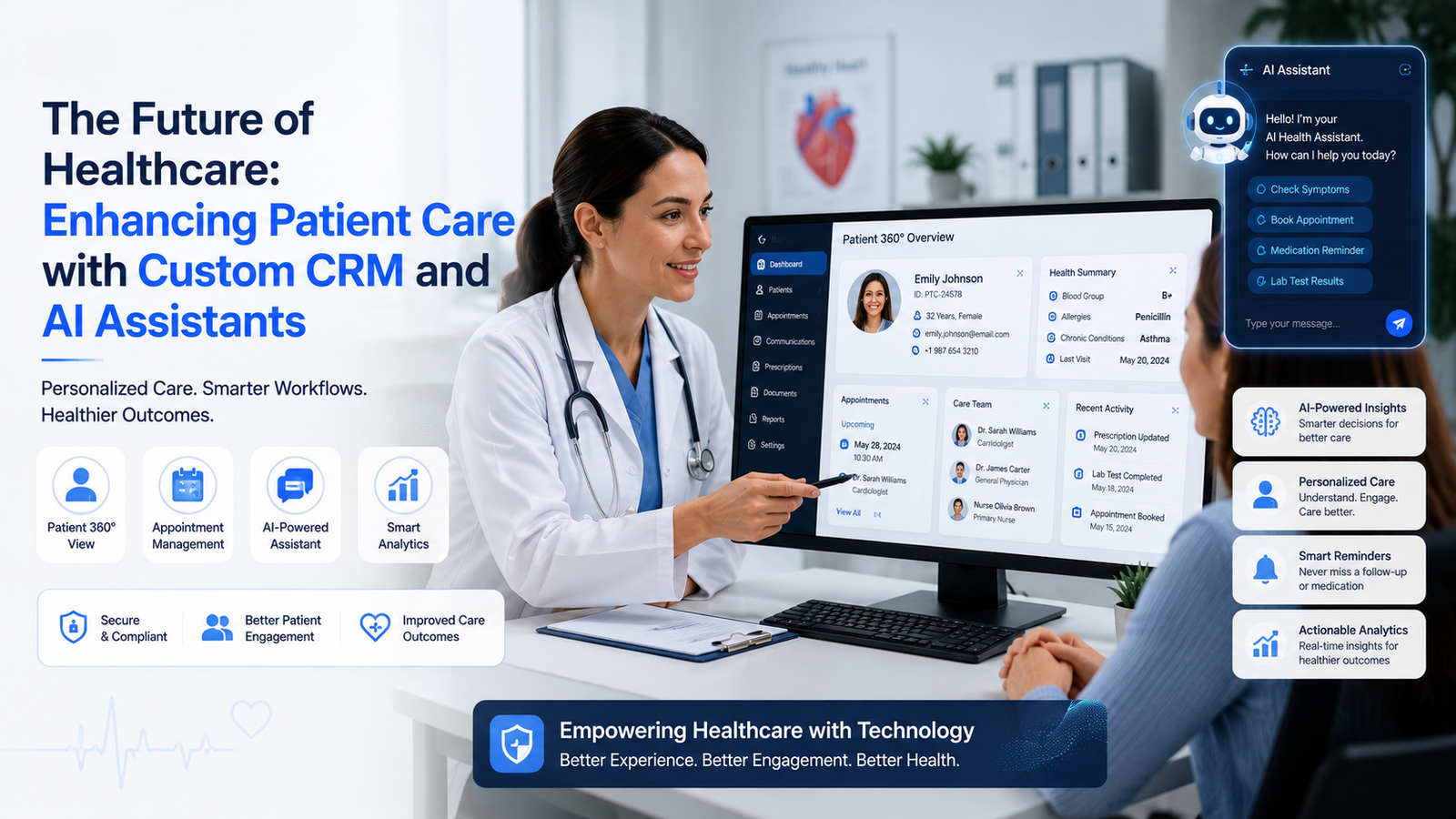
Custom Healthcare Customer Relationship Management (CRM) systems powered by Artificial Intelligence are changing the landscape. By centralizing patient information, automating administrative workflows, and leveraging AI for patient engagement, healthcare providers can focus on what truly matters: saving lives and improving patient outcomes.
Standard CRM solutions like Salesforce or HubSpot are great for sales, but healthcare requires specialized, HIPAA-compliant ecosystems built specifically around the patient journey.
 by Skylink Infosolutions™
Why Healthcare Needs Custom CRMs
📅 Automated Scheduling
AI assistants handle appointment bookings, send reminders, and manage cancellations, dramatically reducing no-show rates.
🔒 HIPAA Compliance
Custom solutions ensure that sensitive patient data is stored securely and compliantly from the ground up.
🩺 Telehealth Integration
Seamlessly integrate video consultations, digital prescriptions, and remote monitoring tools into a single platform.
The AI-Powered Patient Journey
📱 Step 1: Intelligent Onboarding
Patients interact with a secure AI assistant to describe symptoms, which automatically directs them to the correct specialist and securely collects intake forms.
🧠 Step 2: Unified Medical Records
The CRM aggregates data from wearables, past visits, and lab results, presenting the doctor with a cohesive, AI-summarized patient history.
⚡ Step 3: Proactive Care Alerts
AI monitors patient data and flags high-risk individuals (e.g., irregular heart rates from wearables), alerting staff before a crisis occurs.
📈 Step 4: Automated Follow-ups
Post-treatment, the CRM automatically checks in on the patient via SMS or email, monitors recovery progress, and triggers alerts if complications are reported.
Generic CRM vs Custom Healthcare CRM
| Generic Business CRM | Custom Healthcare CRM |
|---|---|
| Focused on "Sales Leads" and "Pipelines" | Focused on "Patient Outcomes" and "Care Pathways" |
| Requires expensive plugins for HIPAA compliance | Built native with HIPAA, GDPR, and HL7/FHIR compliance |
| Basic email automation | Secure, encrypted multi-channel patient communication |
| Disconnects from Electronic Health Records (EHR) | Deep, bi-directional integration with EHR systems |
Departments Benefiting from Healthcare CRMs
👩⚕️ Clinical Staff
Doctors and nurses spend less time typing notes and searching for records, allowing more face-to-face time with patients.
🏥 Administration
Automated billing, insurance claims processing, and resource scheduling for rooms and medical equipment.
Conclusion
Adopting a custom CRM with AI capabilities empowers healthcare providers to deliver proactive, highly personalized care while maintaining strict operational efficiency and security. It shifts the focus from managing records to managing health.
Final Thoughts
Building a custom healthcare CRM is an investment in your patients' well-being. By leveraging AI and automation, medical facilities can provide a modern, frictionless experience that builds trust and saves lives.