 31/08/2026
Turning Real Estate Leads Into Organized Sales Opportunities
Real estate businesses manage a constant flow of inquiries, property requirements, site visits, follow-ups, and customer conversations. When these activities are handled across spreadsheets, messaging apps, and disconnected systems, it becomes difficult for sales teams to know which leads need attention and where each opportunity stands.
A Real Estate CRM brings these activities into a centralized platform. By organizing lead information, customer requirements, follow-ups, property interests, site visits, and sales stages in one place, CRM systems help teams respond more consistently and gain clearer visibility into the sales pipeline.
The result is not simply better record keeping. A well-structured CRM can help sales teams prioritize opportunities, reduce missed follow-ups, improve coordination, and move qualified prospects more efficiently toward conversion.
 by Skylink Infosolutions™
Key Ways a Real Estate CRM Improves Sales Performance
🎯 Better Lead Prioritization
Centralized lead information helps sales teams identify active opportunities, understand customer requirements, and focus attention on prospects that need immediate follow-up.
🔄 Structured Follow-Ups
Follow-up activities, reminders, site visits, and lead status can be organized in a consistent workflow instead of relying on manual notes or scattered spreadsheets.
📊 Clear Sales Pipeline Visibility
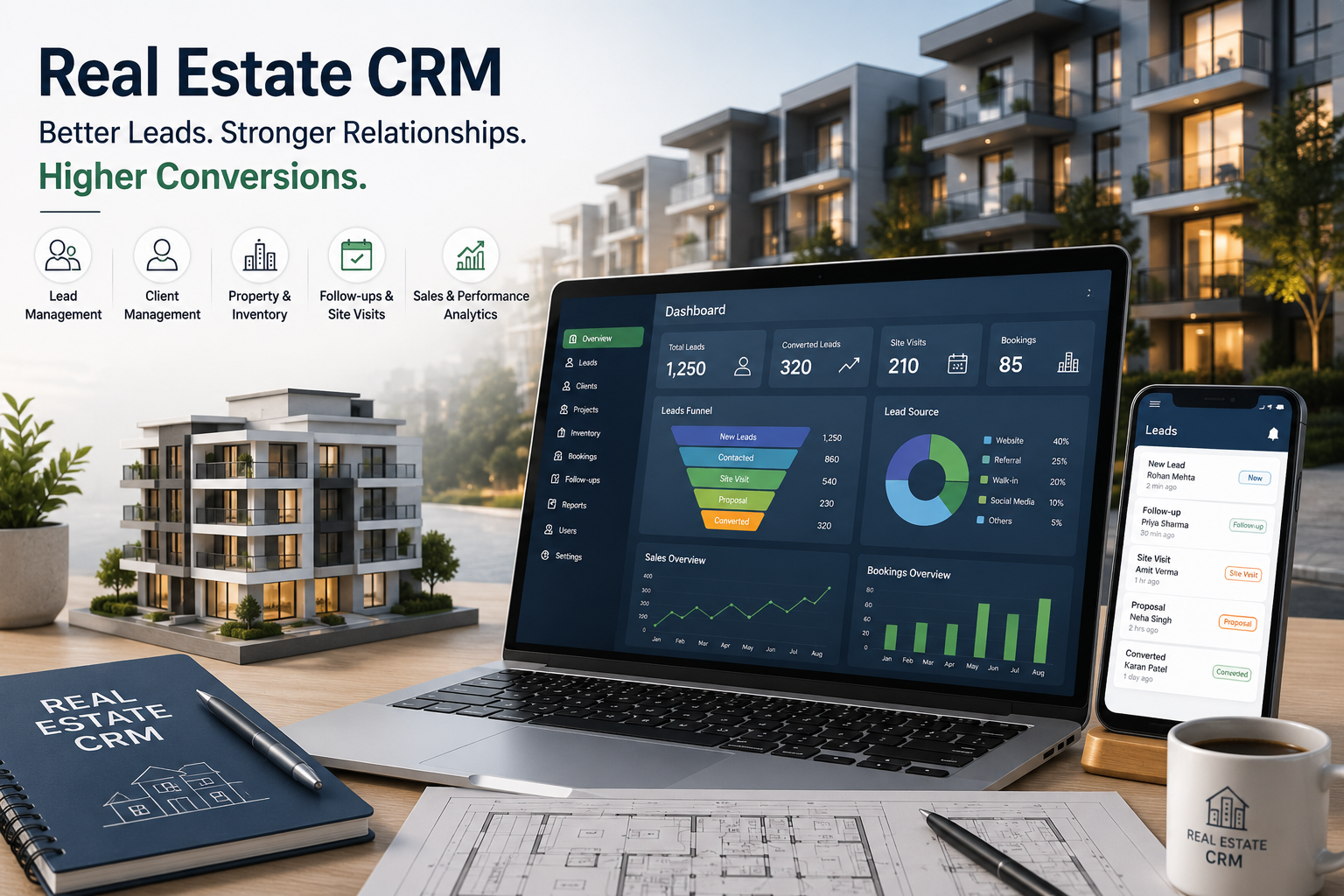
Management can monitor lead stages, conversions, pending activities, and sales performance from a centralized dashboard.
How a Real Estate Lead Moves Through the CRM
🏠 Step 1: Lead Capture
Leads can enter the CRM through internal entry, bulk import, or connected lead sources, creating a structured record for the sales team.
👤 Step 2: Requirement & Qualification
The team records customer requirements, preferred property or project, source, and other relevant information to understand the opportunity.
📞 Step 3: Follow-Up & Site Visit
Sales executives can track follow-ups and schedule site visits while maintaining the lead's current status and activity history.
✅ Step 4: Conversion & Client Management
When a lead converts, the customer can move into the client and booking workflow with the relevant project, unit, sales executive, and other details connected.
Manual Process vs CRM-Based Sales Management
| Traditional Approach | Real Estate CRM Approach |
|---|---|
| Lead details stored in multiple places | Centralized customer and lead records |
| Follow-ups depend heavily on manual tracking | Structured follow-ups, reminders, and activity tracking |
| Difficult to see current lead status | Clear lead stages and sales pipeline visibility |
| Property availability checked separately | Project and inventory information connected to sales workflows |
| Management relies on manual reports | Dashboards and reports provide operational visibility |
Teams That Benefit from a Real Estate CRM
💼 Sales Team
Sales executives can manage leads, customer requirements, follow-ups, site visits, and conversion activities from one workspace.
📈 Management
Managers can view pipeline activity, conversions, inventory-related information, and sales performance through centralized reporting.
🤝 Brokers & Channel Partners
Broker-generated leads, clients, bookings, performance, and commission-related information can be organized within the CRM.
🏢 Operations
Project, inventory, booking, attendance, notifications, and other internal activities can be connected to the wider sales process.
Common Challenges a CRM Helps Address
- ⚠️Missed or delayed follow-ups caused by scattered lead information.
- 🔎Limited visibility into lead status, customer requirements, and sales activities.
- 🏘️Difficulty connecting customer interest with specific projects and available property units.
- 📋Manual reporting and repeated data entry across different tools.
- 🔗Disconnected lead sources and internal sales workflows.
Why Lead Conversion Improves with Better Process Visibility
Lead conversion depends on more than simply generating inquiries. Sales teams need timely follow-ups, accurate customer information, clear ownership, relevant property details, and visibility into what action should happen next.
A centralized CRM provides the structure needed to manage these activities consistently. When lead, customer, project, inventory, site visit, and booking information are connected, teams can spend less time searching for information and more time engaging with customers.
Final Thoughts
A Real Estate CRM can become the operational foundation for a growing property sales organization. By bringing leads, customers, projects, inventory, follow-ups, brokers, bookings, and reporting into a connected system, businesses can create a more organized and measurable sales process.
The goal is not just to store customer data. It is to create a clear path from the first inquiry to the final booking while giving sales teams and management the information they need at every stage.